
About All Tours From Cairo ToursFrom Sharm El SheikhFrom Dahab ToursSinai & St. Catherine ToursSunrise ToursHike Tours Directions Hours & Fees
Find Tours 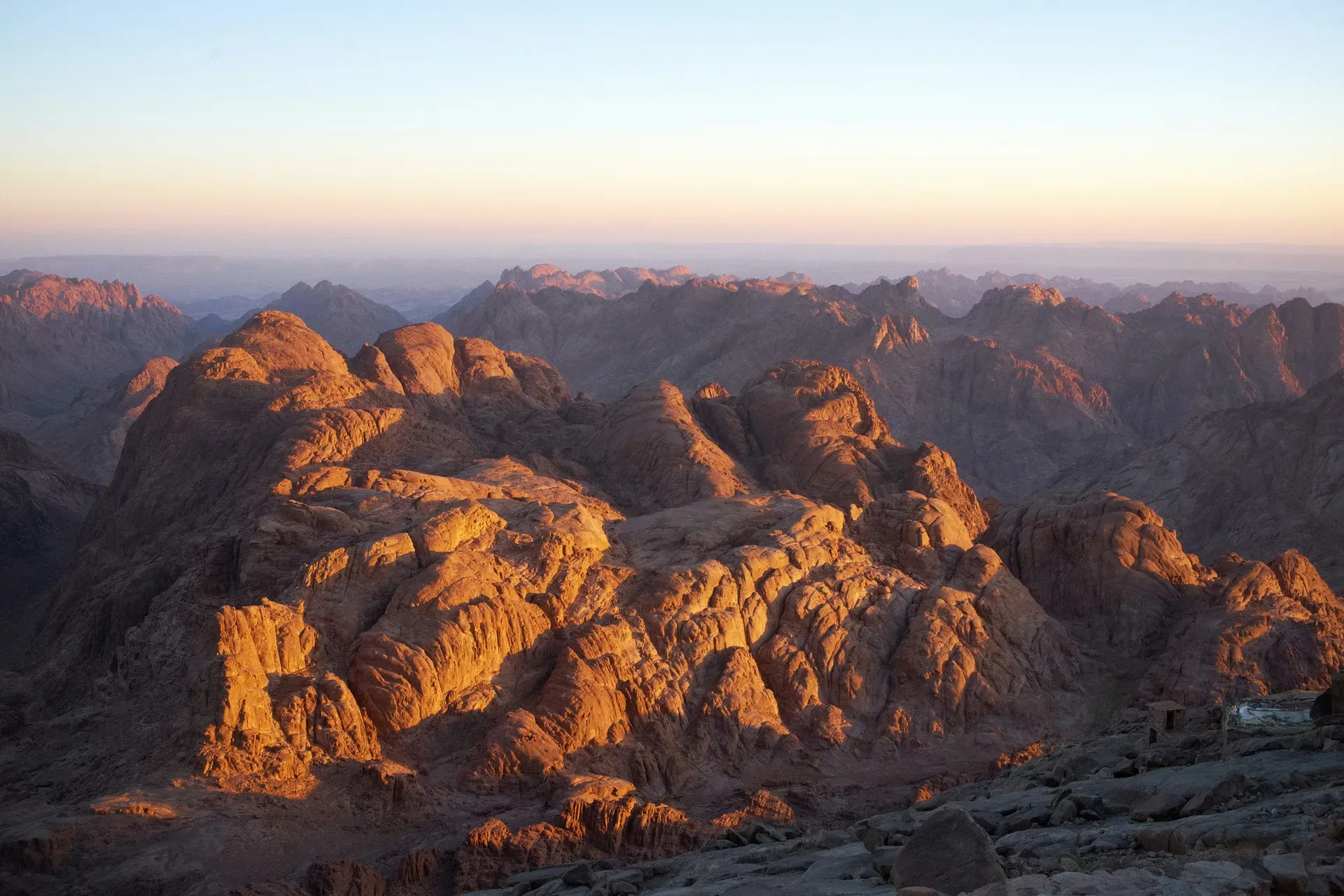
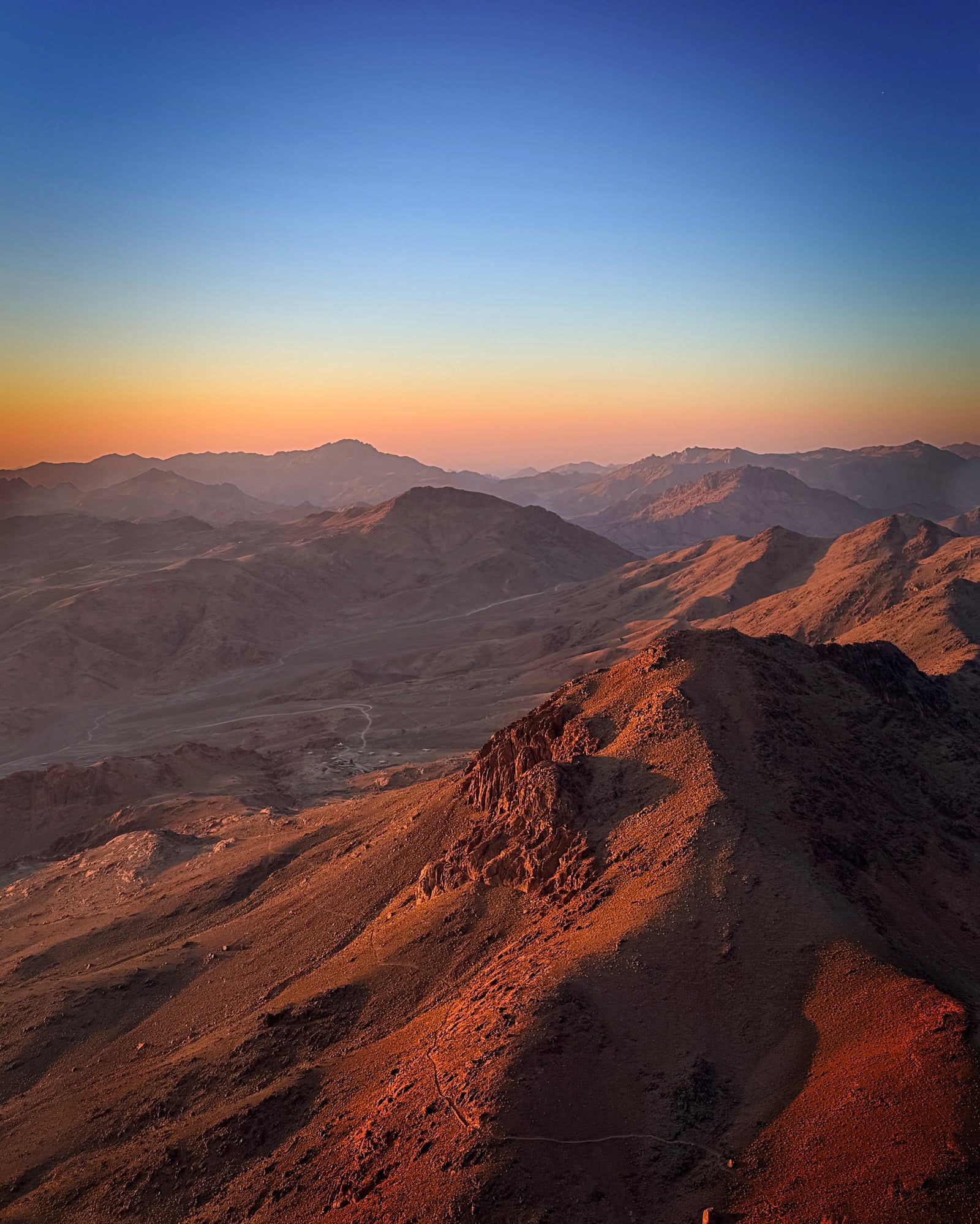
Start walking between 1 and 2 AM, climb the final 750 stone steps past the Gate of the Law, and watch the sun rise near 6:00 AM over a sea of granite ridges from the 2,285-metre summit where a chapel and a 12th-century mosque stand side by side. Afterwards, walk 15 minutes to Saint Catherine's Monastery, built 548-565 CE and still working after more than 1,400 years — home to roughly 3,500 ancient manuscripts, including the spot where the Codex Sinaiticus was found.
Find Guided ToursMount Sinai — Jabal Musa, "the Mountain of Moses" — is a 2,285-metre granite peak in Egypt's south-central Sinai Peninsula, about 3 km from the town of Saint Catherine. Jews, Christians and Muslims all revere it as the mountain where Moses received the Ten Commandments, and pilgrims have been climbing it since at least 381 AD, when the earliest recorded ascent was made. The classic visit is a night climb to catch sunrise: you leave the trailhead between 1 and 2 AM and stand on the summit by dawn, where a small chapel and a 12th-century mosque share the rocky crown.
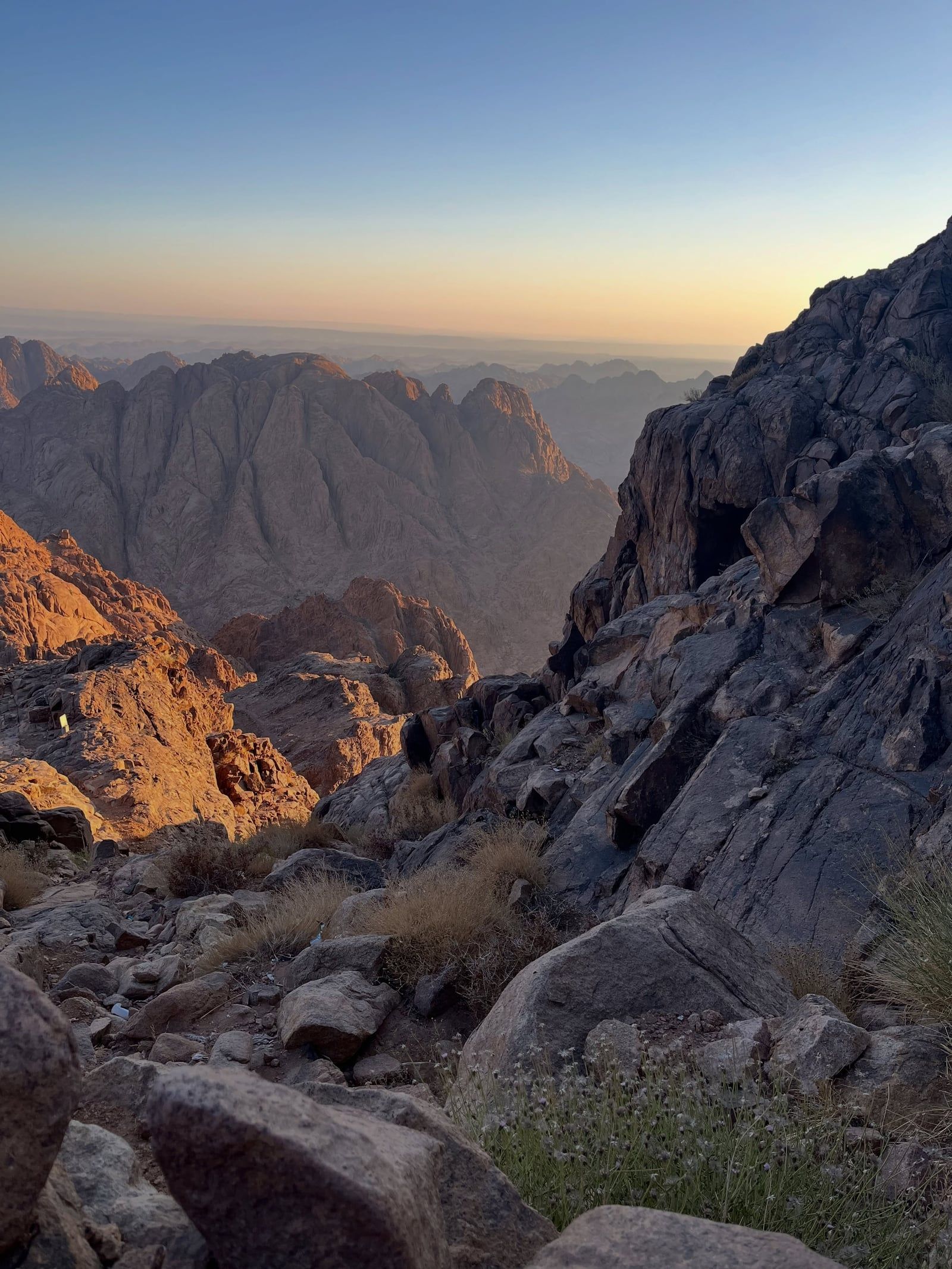
The rock under your boots is old. The mountain's alkaline granite belongs to the Arabian-Nubian Shield, formed some 600-550 million years ago in the Neoproterozoic era, with a distinctive ring-complex structure. The human additions came much later: Christian hermits settled here by the 4th century, and monks carved the 3,750 Steps of Repentance — the steep pilgrim stairway — in the 6th-7th centuries.
At the foot of the mountain stands Saint Catherine's Monastery, built by Emperor Justinian I between 548 and 565 CE. It's the world's oldest Christian monastery still operating in its original function, with a monastic community in place for over 1,400 years. Its library holds roughly 3,500 ancient manuscripts and 2,000 Byzantine icons, and it's where the Codex Sinaiticus — one of the oldest surviving Bibles — was discovered. UNESCO inscribed the whole Saint Catherine Area as a World Heritage Site in 2002.
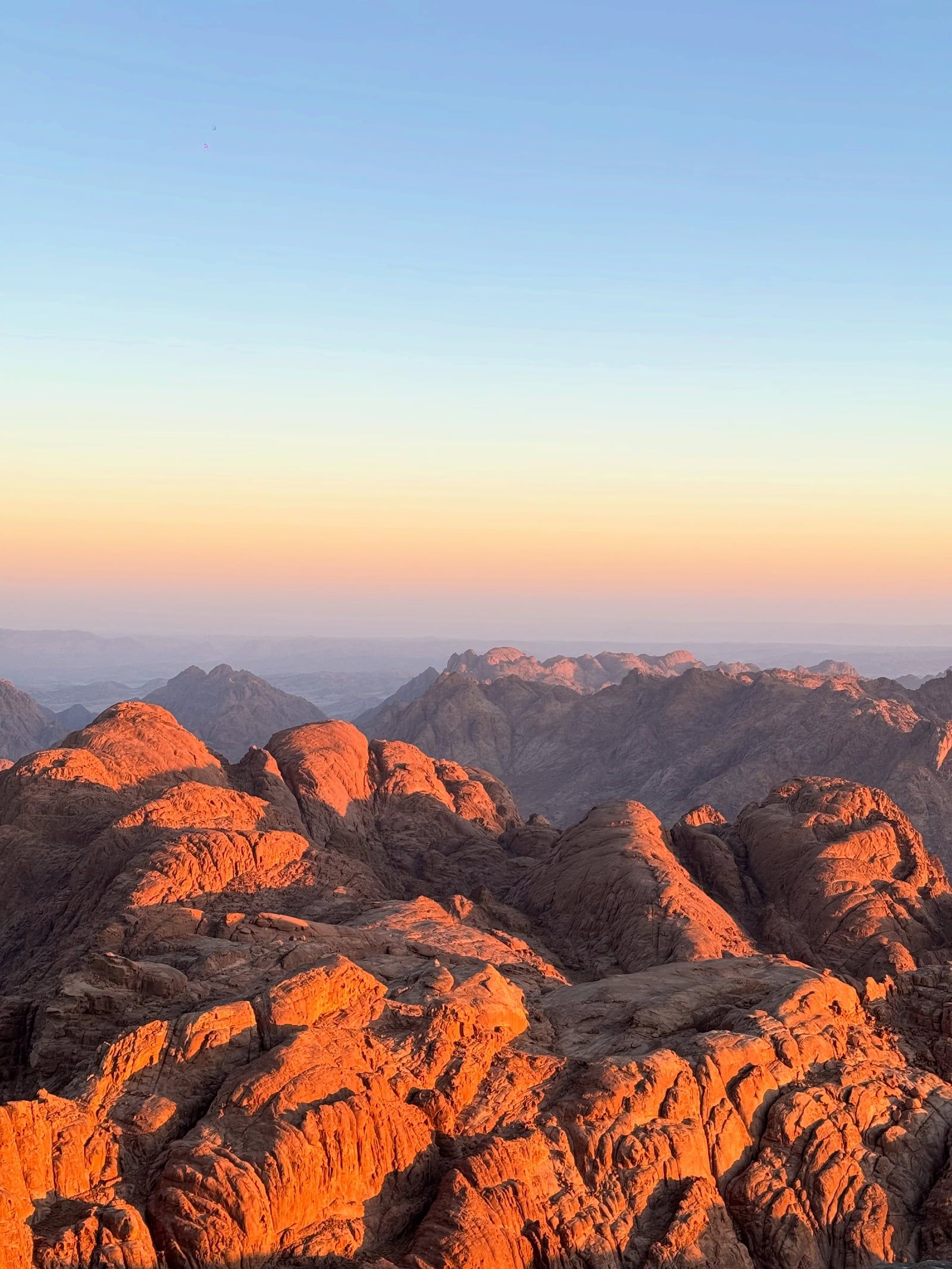
Look up from the summit and you'll see Mount Catherine (2,629 m), Egypt's highest peak, looming next door — at least ten peaks in the range top Mount Sinai itself. The surrounding protectorate, 60,100 hectares of high desert, shelters Nubian ibex and the Sinai Baton Blue butterfly, the world's smallest. Days are hot, nights bite. Pack accordingly.
Discover the full history and cultural significance on our About page.
Start walking between 1 and 2 AM, reach the 2,285 m summit by 4-5, and wait in the dark for dawn near 6:00. Light turns Mount Catherine and the granite ridges gold, seen from a plateau holding both a small chapel and a 12th-century mosque. Pilgrims have climbed for this for some 1,700 years.
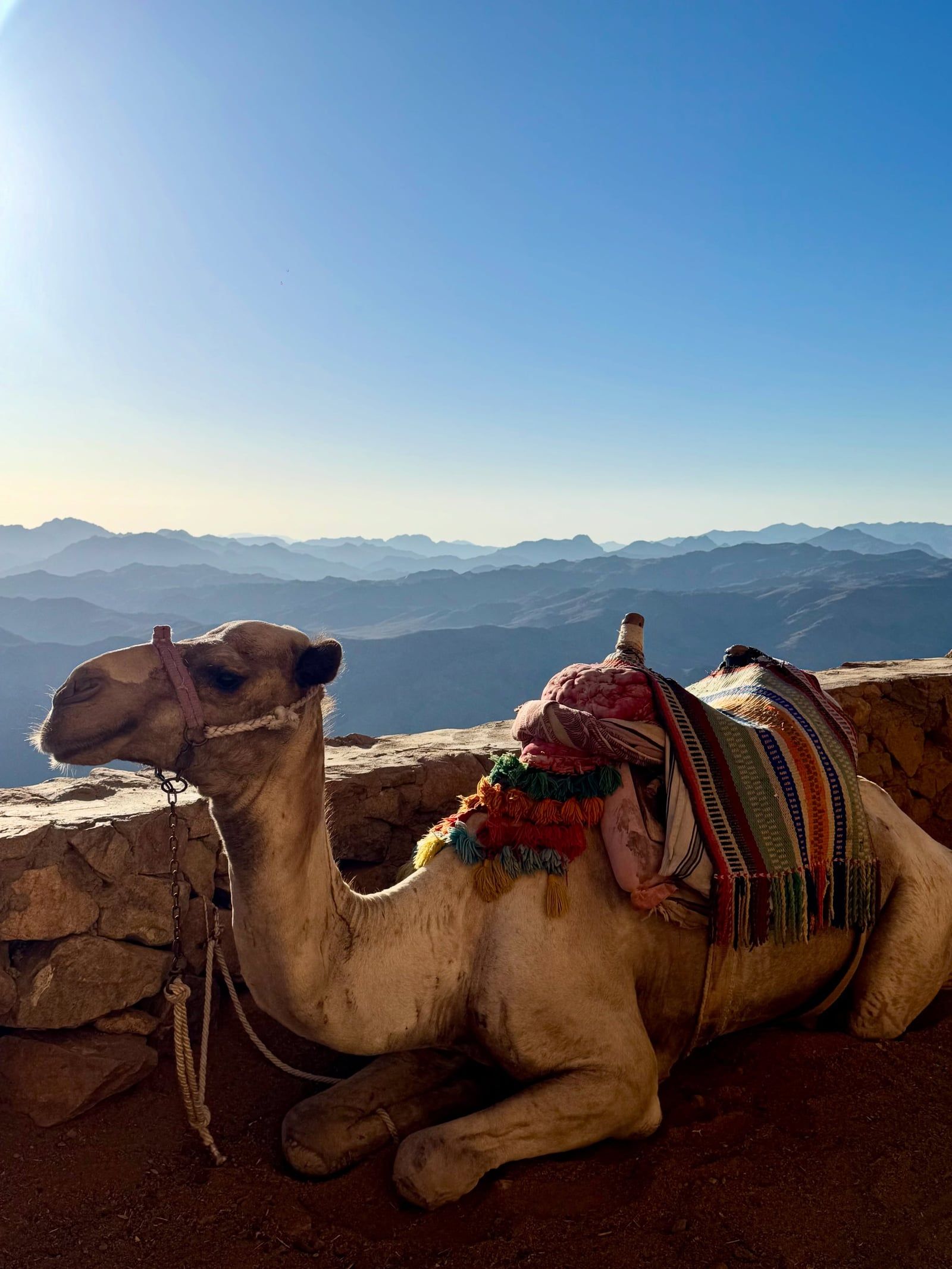
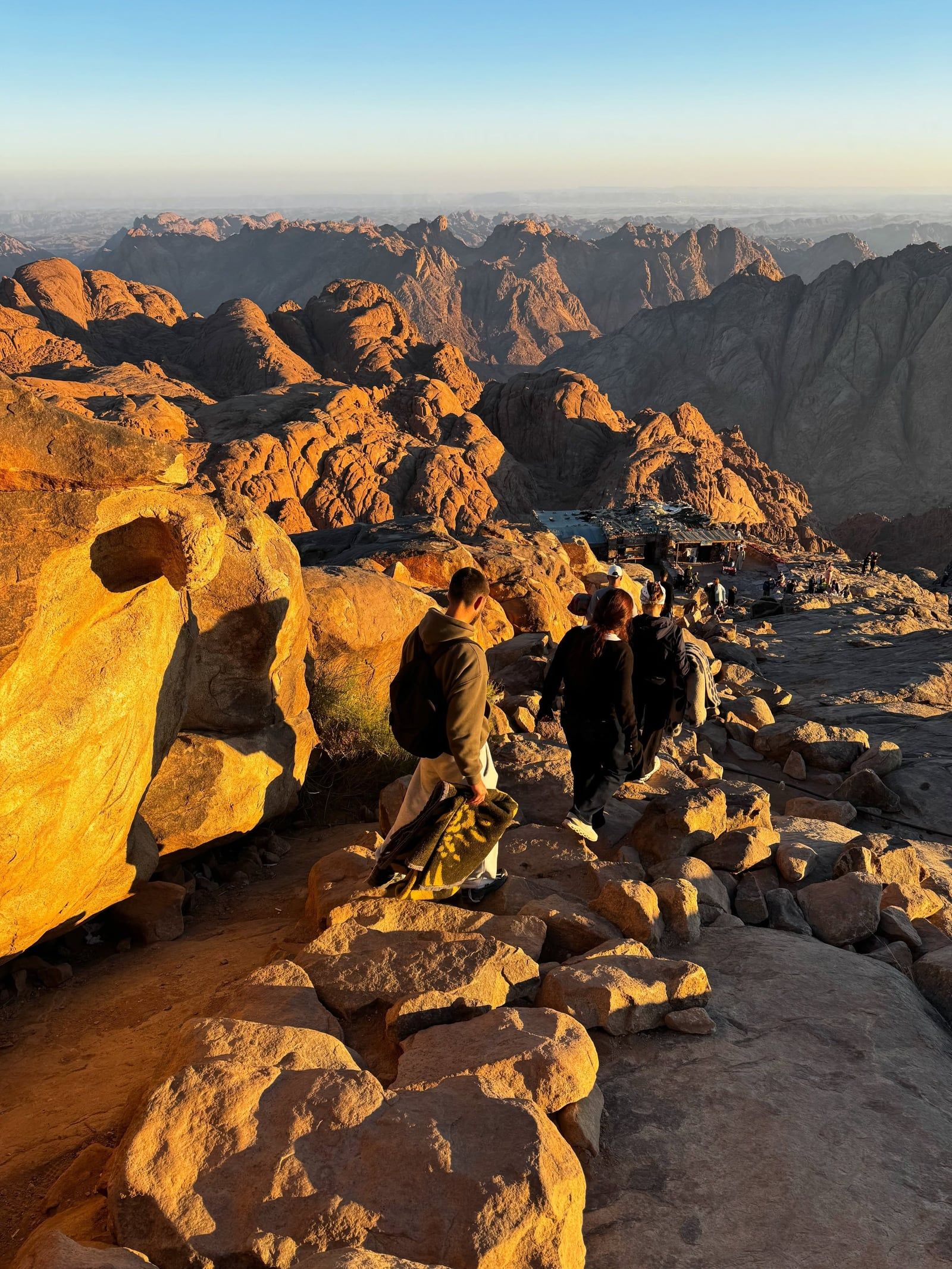
The Camel Path's switchbacks are walked in darkness, under skies with no light pollution. Bedouin tea huts glow along the route, selling mint tea, coffee, chocolate and instant noodles; blankets go on the moment you stop moving and the cold bites. Walking keeps you warm. Standing still doesn't.
At the mountain's foot sits a fortress built by Justinian I between 548 and 565 CE, operating continuously for over 1,400 years. Roughly 3,500 manuscripts and 2,000 Byzantine icons are kept here, and it's where the Codex Sinaiticus was found. Visit Monday-Thursday and Saturday, 9 to noon; shoes off at the basilica.
Monks hand-carved this stairway in the 6th-7th centuries, and it's the direct pilgrim route: steep, rough, and about 2 hours up for the fit. Remnants of old chapels line the way, and camels stop at Elijah's Basin, leaving the final 750 stone steps between granite walls to climb on foot.
Book a sunrise climb led by a Bedouin guide, with hotel pickup from Sharm El Sheikh or Dahab and prices from $27.
Swipe to see more
 Free Cancellation 16h
 Free Cancellation 14h
 Free Cancellation 17h
 Free Cancellation 15h Free Cancellation 16h Free Cancellation 14h Free Cancellation 17h
 Free Cancellation 18h Free Cancellation 16h Free Cancellation 14h
 Free Cancellation Free Cancellation 17h Free Cancellation 17h
 Free Cancellation 15h
 12h
 17h Free Cancellation 16h Free Cancellation 17h
 Free Cancellation
 Free Cancellation
Aim for March-May or October-November, when days run 22-35°C, nights drop to a comfortable 10-20°C, and clear skies make for reliable sunrises. Book tours 2-4 weeks ahead in these peak months.
Daytime temperatures of 22-35°C dropping to 10-20°C at night, minimal rainfall and clear skies for the sunrise. The monastery visit afterwards is comfortable too.
Punishing heat of 37-45°C at the base with essentially zero rainfall. Climbs require a very early 10 PM start, and daytime attempts invite heat exhaustion. Skip it.
The sweet spot returns: days of 22-35°C, nights at 10-20°C, minimal rain and clear summit skies. Pair it with a weekday to dodge weekend crowds.
Crisp days of 15-25°C and the year's clearest skies, but night climbs sit at 0-5°C on the summit, with occasional snow on the high peaks. Manageable with layers, hat and gloves.
The mountain itself has no opening hours — it's open around the clock for guided climbs, and that's the point: the classic sunrise ascent starts walking between 1:00 and 2:00 AM to reach the 2,285 m summit by 4–5 AM, ahead of dawn near 6:00 AM. Sunset climbs are also offered. Saint Catherine's Monastery at the foot of the trail keeps far stricter hours: Monday–Thursday and Saturday, roughly 9:00 AM to 12:00 noon (some sources say 9:00–11:30 AM). It's closed Fridays, Sundays, and major Greek Orthodox feast days, and can shut at short notice — amid the 2025 land-ownership dispute the monks closed the gates for months, so check the current status before you travel. If you're on an organized excursion from Sharm el-Sheikh, expect the whole thing to run 14–16 hours, with pickup around 8:00–8:30 PM and return near 8:00 AM.
| Category | Price |
|---|---|
| Mount Sinai (mountain access) | Free — there is no ticket for the mountain itself |
| Mandatory Bedouin guide (Jabaliya tribe, per group) | EGP 800 (approx. US$16), flat fee per group, hired at the entrance (2025 rate) |
| Camel ride to Elijah's Hollow/Basin | EGP 250 (some operators quote €20 each way) |
| Saint Catherine's Monastery | Free per most recent visitor reports; some tours collect €10 per person at the Saint Catherine visitor area, and a 2026 Egyptian fee list prices it at EGP 200 (US$4) — budget up to €10/EGP 500 per person to be safe |
| Icon Gallery (monastery museum) | Separate small admission, historically charged (current amount not published) |
| Organized sunrise tours from Sharm el-Sheikh or Dahab | €24–60 per person, usually including transport, guide, and monastery visit |
Unguided hiking is not permitted — the Bedouin guide is checked at the visitor centre before you start, so figure the EGP 800 into your budget as a non-optional cost. Bring Egyptian pounds in small notes for the guide, camel, and mountain tea huts, plus a card, since card payment is increasingly required for official tickets. Plan the timing so you're down from the summit by 8–9 AM: the monastery opens at 9:00 and closes at noon, and in summer (June–August, 37–45°C at the base) climbs need a very early start around 10 PM anyway. Multi-day trekking such as the 200 km Sinai Trail is currently suspended, with no permits being issued as of late 2024–2026, so the summit climb is the main permitted walk.
For complete schedules and ticket prices, visit our Hours & Fees page.
Mount Sinai sits 440 km from Cairo in Egypt's South Sinai Governorate, reached by road via military checkpoints — almost everyone arrives on a sunrise tour from Sharm el-Sheikh (230 km, about 3 hours) or Dahab (130 km, about 2 hours), usually departing around 8-8:30 PM or 11 PM respectively. Bring your physical passport; it's checked repeatedly en route, and a licensed Bedouin guide is compulsory for the climb itself.
📍 Mount Sinai (Jabal Musa), Saint Catherine, South Sinai Governorate, Egypt — the trailhead starts about 3 km from Saint Catherine town; there is no street address, as access runs through the Saint Catherine visitor centre
The most popular and safest option given the checkpoint system: hotel pickup in an air-conditioned minibus around 8:00-8:30 PM, a roughly 3-hour drive over 230 km, a night climb with a Bedouin guide, sunrise on the summit, then a monastery visit before returning around 8:00 AM. The full excursion runs 14-16 hours. Departures go several days a week — Sunday, Monday, Wednesday and Friday with some operators — so book 2-4 weeks ahead in peak months.
Dahab, 130 km away, has the shortest transfer of any departure point — about 2 hours. Minibuses typically roll out around 11 PM, timed for a 1:00-2:00 AM start on the trail. The town's hostels and tour shops are the main booking hubs, and organized trips bundle transport, guide and the monastery visit. If you're travelling independently rather than on a package, this is the base to choose.
East Delta and Go Bus services run the 440 km from Cairo's Gateway (Turgoman) and Abbasseya stations to Sharm el-Sheikh or Dahab — 7-9 hours, with the Cairo-Sharm leg at 480 EGP and Cairo-Dahab at 570 EGP. Overnight timings can line up with a night climb, then a local taxi or tour covers the last stretch into Saint Catherine. Budget €15-25 for the Mount Sinai leg plus the onward taxi fare.
A 1-hour flight to Sharm El Sheikh International (SSH), the nearest airport, followed by 230 km and roughly 3 hours by road gets you there in 4-5 hours total. Most visitors then join a sunrise tour or hire a private transfer onward to Saint Catherine. Faster than the bus by half a day or more, though domestic airfare swings with the season — compare it against the €24-60 tour packages before committing.
For detailed transport options and routes, visit our Directions page.
The free 15-day entry stamp at Sharm el-Sheikh airport covers only Sharm, Dahab, Nuweiba and Taba — Saint Catherine sits outside that zone. You'll need a full Egyptian visa: US$30 cash on arrival, or the US$36 digital option in Cairo from 1 August 2026. Buy it at the kiosk before immigration, or risk being turned back at a checkpoint on the road to the mountain.
Passports are checked at multiple military checkpoints between Sharm or Dahab and Saint Catherine — one 2024 visitor counted twelve — and again at the trailhead, where bags get inspected and guides verified. A photocopy won't do. Keep it in an accessible pocket, not buried in your backpack, since the trailhead inspection can hold up your 1 AM start.
The compulsory Jabaliya Bedouin guide costs about EGP 800 as a flat fee per group, hired at the entrance, and camels run EGP 250 to Elijah's Basin. Kiosk water and snacks carry inflated mountain prices, and Bedouin vendors rent blankets and sell hot tea on cold nights. Official tickets increasingly require card payment, so carry both.
Ascend the gentle Camel Path (2.5–3 hours, camels and tea huts along the way) and return the same way — the steeper 3,750-step Steps of Repentance have reportedly been closed for descents. The final 750 steps are the trickiest part on tired legs, so bring poles. A headlamp is essential; the path is completely unlit between your 1 AM start and the 6 AM sunrise.
Saint Catherine's Monastery opens Monday–Thursday and Saturday, roughly 9 AM to noon, and shuts on Fridays, Sundays and Orthodox feast days. Plan the climb so you descend by 8–9 AM and walk straight in. Entry has been reported free, but some tours collect €10 and a 2026 fee list prices it at EGP 200, so budget up to €10. Check opening status before travelling — the monks closed the gates for months during the 2025 land dispute, and the settlement is still pending.
Summit temperatures sit around 0–5°C on winter night climbs, even when the base is 15–25°C during the day, and summer starts still drop cold once you stop moving. Wear warm layers, a hat, gloves and a windproof jacket year-round. Forgot something? Bedouin vendors at the summit rest stops rent blankets. Cover shoulders and knees for the monastery too, and take your shoes off at the basilica and the Burning Bush.
A 6th-century fortress monastery built under Emperor Justinian I, holding some 3,500 manuscripts and 2,000 Byzantine icons — the Codex Sinaiticus was found here. Time your descent for its 9:00 AM opening, since it closes at noon.
Egypt's highest peak at 2,629 m, sitting right beside Mount Sinai and dominating the summit view. It's a tougher, quieter climb than Jabal Musa — the sunrise without the pilgrim crowds.
A laid-back Red Sea town whose hostels and dive shops run the Mount Sinai minibuses (usually departing around 11 PM). After the night climb, recover with snorkelling and diving on the Gulf of Aqaba.
Read what travelers share about their experience visiting Mount Sinai — from practical tips to personal highlights.
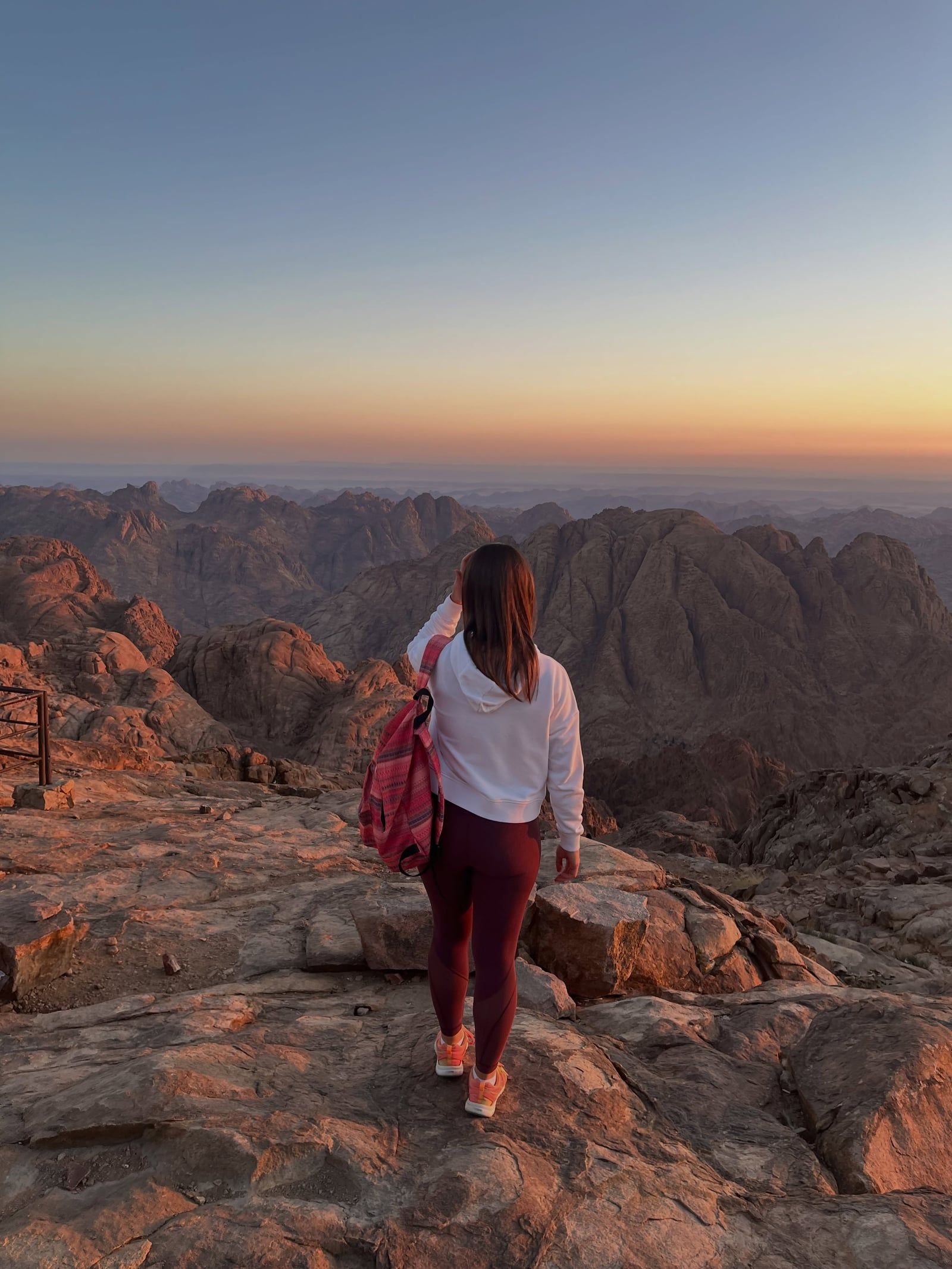
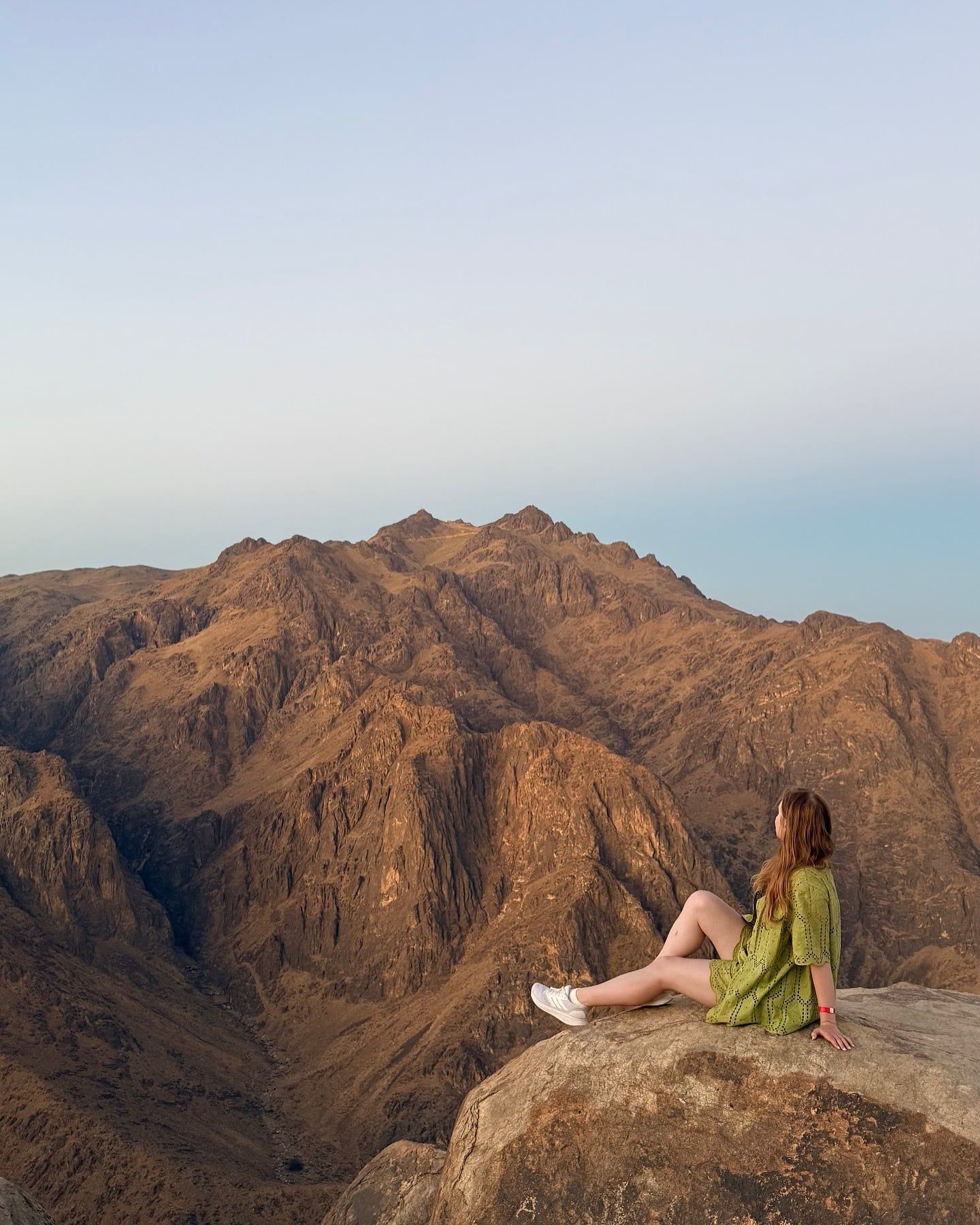
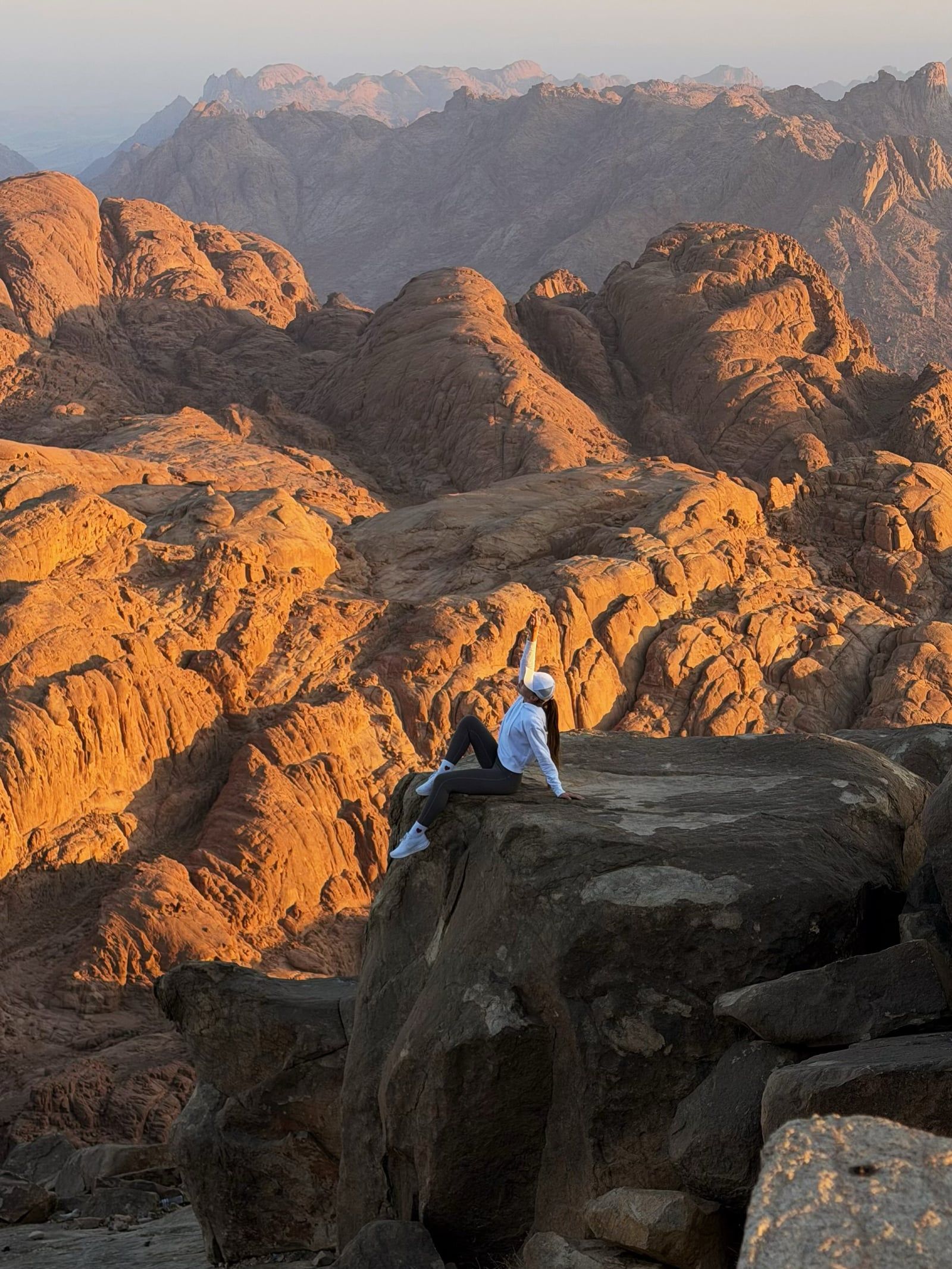
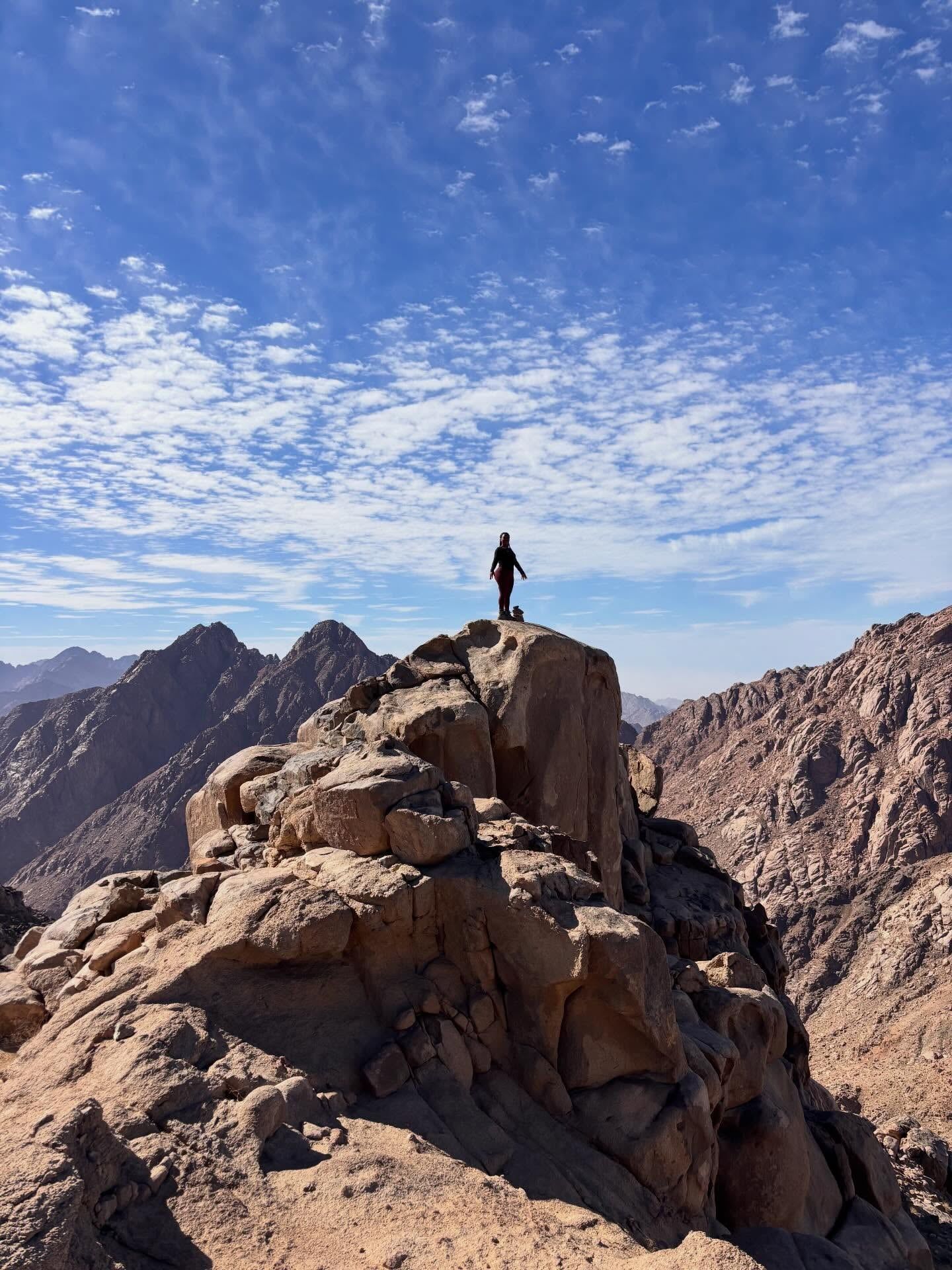
The mountain itself has no entry ticket, but a mandatory Bedouin guide costs about EGP 800 (roughly US$16) as a flat fee per group at the entrance, and a camel ride to Elijah's Basin adds EGP 250. Organized sunrise tours from Sharm el-Sheikh or Dahab run €24-60 per person, usually bundling transport, guide and monastery visit. Bring small notes in Egyptian pounds — the tea huts and kiosks on the route only take cash.
The full round trip takes 3-4 hours over 11.5 km with 700 m of elevation gain — the Camel Path up is 2.5-3 hours, the steeper Steps of Repentance about 2 hours. Plan on 30-60 minutes on the summit waiting for sunrise, and add 1-1.5 hours for Saint Catherine's Monastery afterwards. Most people do it as a 14-16 hour overnight excursion from Sharm el-Sheikh.
Hikers leave the trailhead between 1:00 and 2:00 AM, reach the summit by 4-5 AM, and watch sunrise near 6:00 AM. If you're coming on a tour, Sharm el-Sheikh pickups start at 8:00-8:30 PM; minibuses from Dahab leave around 11 PM.
From Sharm el-Sheikh it's 230 km, about a 3-hour drive on a tour minibus; from Dahab only 130 km, roughly 2 hours. From Cairo, the 440 km overland route takes 7-9 hours by East Delta or Go Bus (Cairo-Sharm is 480 EGP), while flying to Sharm El Sheikh International plus the road transfer cuts it to 4-5 hours total. Independent travel is discouraged — the road passes through many military checkpoints, so a licensed tour is the practical choice.
A headlamp (the path is unlit), warm layers, a hat, gloves and a windproof jacket — summit temperatures sit at 0-5°C on winter nights, and cold bites hard the moment you stop moving. Carry your physical passport, since it's checked at multiple checkpoints and at the trailhead; a photo copy won't do. Hiking poles help on the descent, especially the final 750 steps, and Bedouin vendors rent blankets if you underestimate the cold.
Yes, a locally licensed Bedouin guide from the Jabaliya tribe is compulsory — guides are assigned and verified at the visitor centre, and unguided hiking is banned. The rate is about EGP 800 flat for the whole group if you hire at the entrance. Note that multi-day treks like the 200 km Sinai Trail are currently suspended, so the summit climb is the main permitted walk.
Fit seniors complete the climb regularly — the Camel Path's gentle grade takes 2.5-3 hours at a relaxed pace, and a camel can carry you most of the way, leaving only the final 750 steps (30-45 minutes) on foot. Children around 8-10 manage the night climb, and kids as young as 6 can do daytime ascents with breaks. Travellers 65+ should check with a doctor first and consider a private tour to set their own pace.
Book 2-4 weeks ahead in peak season, and avoid Egyptian public holidays, when crowds surge. March-May and October-November are the sweet spots — days of 22-35°C, nights of 10-20°C, clear sunrise skies. December-February works too, though summit nights sit at 0-5°C; skip June-August, when base temperatures hit 37-45°C and climbs require 10 PM starts.
Browse verified tours with free cancellation and instant confirmation.
Find Tours


